Doccol temperature controllers
PID temperature controller for AC heating pad
The PID temperature controller model ADN-PID-120V2A is designed for using AC-powered heating pad. This controller offers high sensitivity and precision with t-type thermocouple sensor. It is equipped with a rectal temperature probe suitable for both mice and rats. The controller is equiped with data logger, which can store measured temperature in a text file on a microSD card. It also provide a PC connection port for realtime monitoring and save measured data directly to PC.
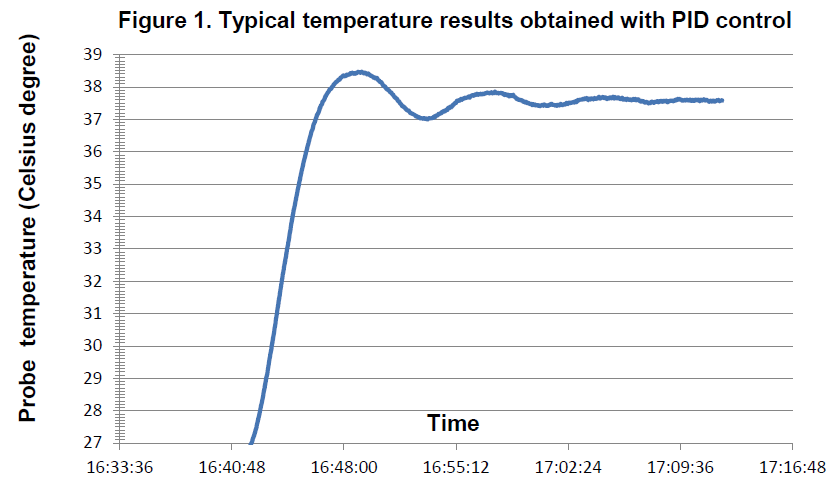
Performance curve with pad AC-50W120V-1215:
Performance curve with pad AC-16W120V-0812:
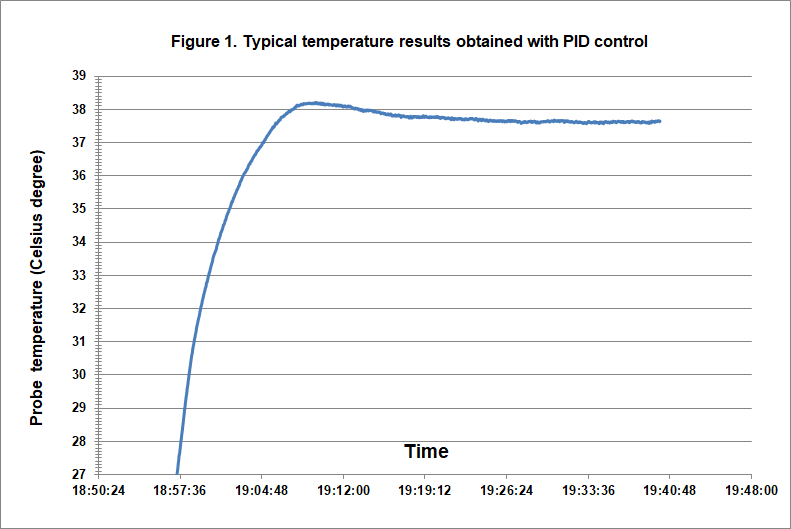
Figure 1. shows a typical temperature monitoring result, which was obtained using the default PID settings, and the temperature sensor was placed in the center of the heating pad and covered with a piece of paper towel, the target temperature was set to 37.50 Celsius degree. The PID controlling process became stabilized after 3 cycles, and the heating pad temperature was maintained within a tight range of +/- 0.10 Celsius degrees. Upper, Performance curve with pad AC-50W120V-1215; Lower, Performance curve with pad AC-16W120V-0812.
PID temperature controller for 12VDC heating pad
The PID temperature controller model ADN-PID-12V8A is featured with low voltage direct current (DC) output for using with a low noise DC-powered heating plate. It allows accurate electrophysiological recording with minimal electromagnetic field interference (EMF). This controller offers high sensitivity and precision with T-type thermocouple sensor. It is equipped with a rectal temperature probe suitable for both mice and rats. The controller is equiped with data logger, which can store measured temperature in a text file on a microSD card. It also provide a PC connection port for realtime monitoring and save measured data directly to PC.
Performance curve:
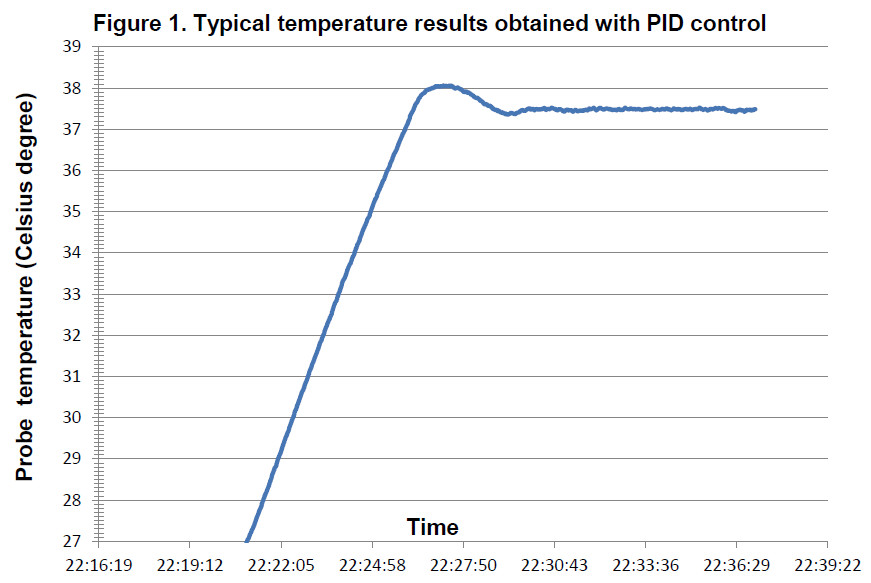
Figure 2. shows a typical temperature monitoring result, which was obtained using the default PID settings, and the temperature sensor was placed in the center of the heating pad and covered with a piece of paper towel, the target temperature was set to 37.50 Celsius degree. The heating pad temperature was maintained within a very tight range of +/- 0.05 Celsius degrees, the temperature fluctuation was almost eliminated.
References: